
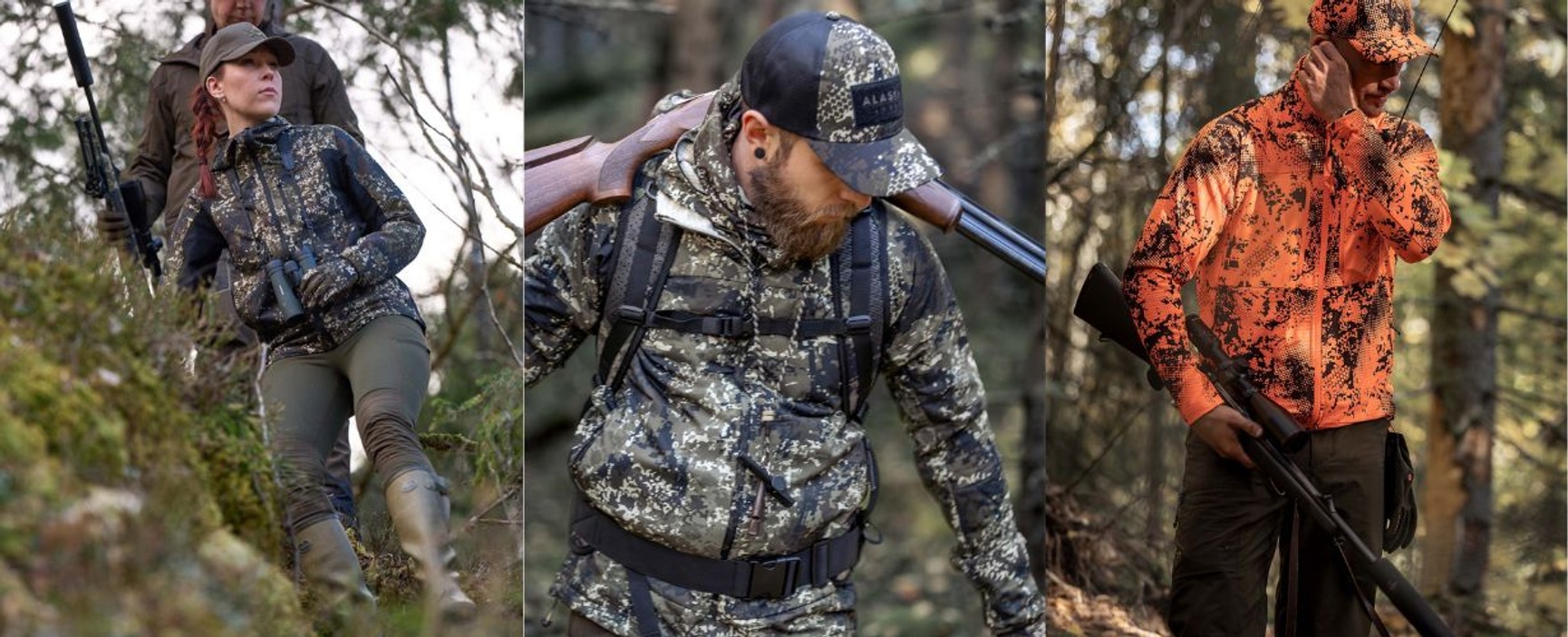
Which camouflage pattern is right for your hunt?
Hunting Camouflage Pattern Guide
The right camouflage depends on where and how you hunt. Compare Alaska 1795 camouflage patterns and find the right combination of camouflage, terrain and visibility for your hunt.
Which camouflage pattern should I choose for my hunt?
A good camouflage pattern uses colours, contrasts and structure to help break up the hunter’s outline, making the silhouette less noticeable against the surrounding environment.
The best pattern therefore depends on the terrain, vegetation, season and type of hunting.
Alaska 1795 has developed a range of camouflage patterns for environments ranging from dense forests to snow-covered landscapes. For certain types of hunting, increased visibility to other hunters is important. For these situations, camouflage patterns are combined with high-visibility orange.
Compare the different patterns below:
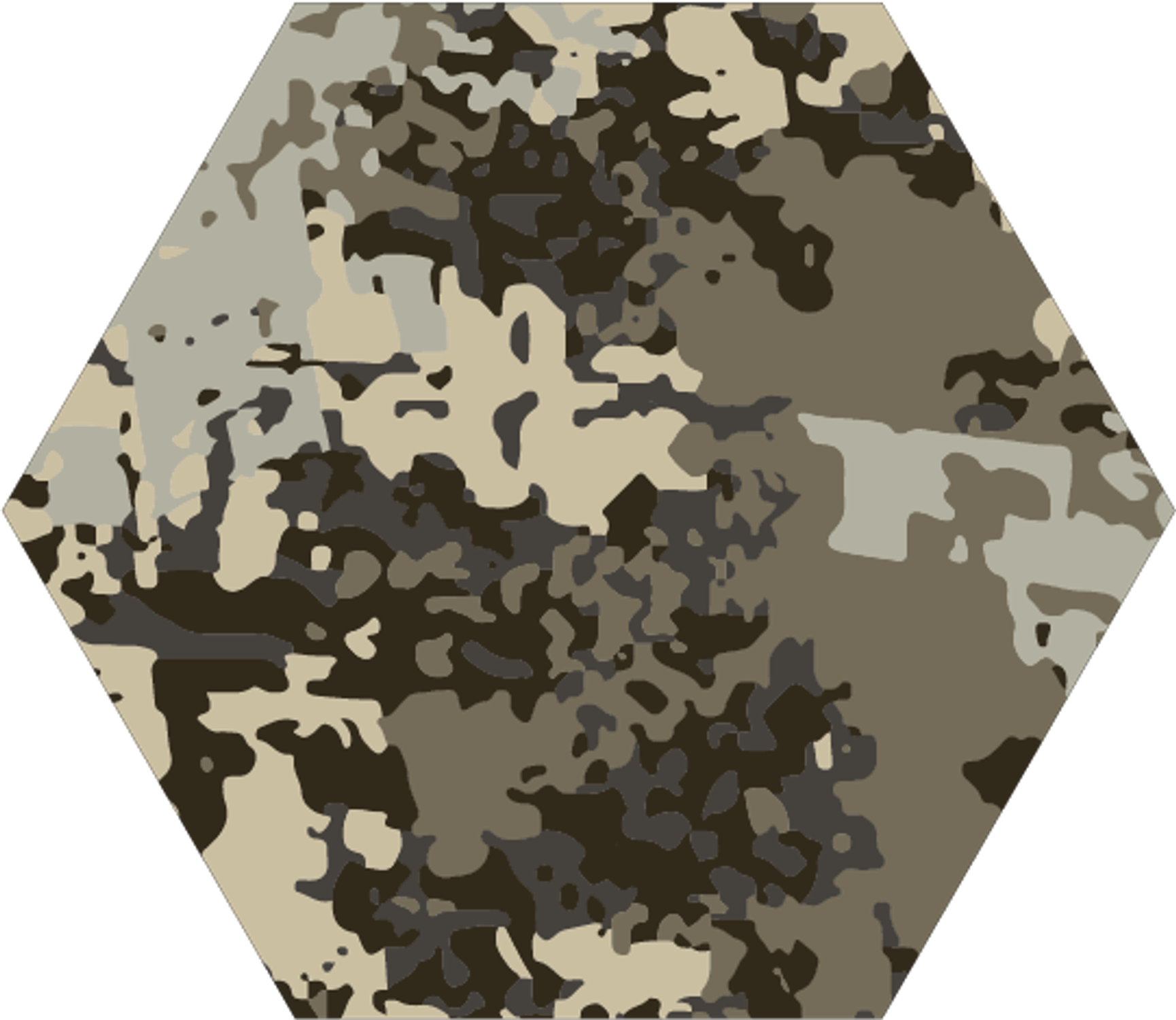
BlindTech Reed – for reeds, grass and open terrain
BlindTech Reed combines light earth tones with distinct contrasts that help break up the hunter’s silhouette in open and sparsely vegetated environments.
Best suited for: Reed beds, dry grassland, rocky areas and open terrain.
Recommended hunting: Active hunting and hunting from a hide in more open environments.
BlindTech Invisible II – versatile camouflage for forest hunting
BlindTech Invisible II is an advanced digital camouflage pattern that combines natural colours with an irregular structure to help break up the hunter’s silhouette in varied forest environments.
Best suited for: Mixed forests and terrain with varied undergrowth.
Recommended hunting: Stalking and stand hunting in changing forest environments.
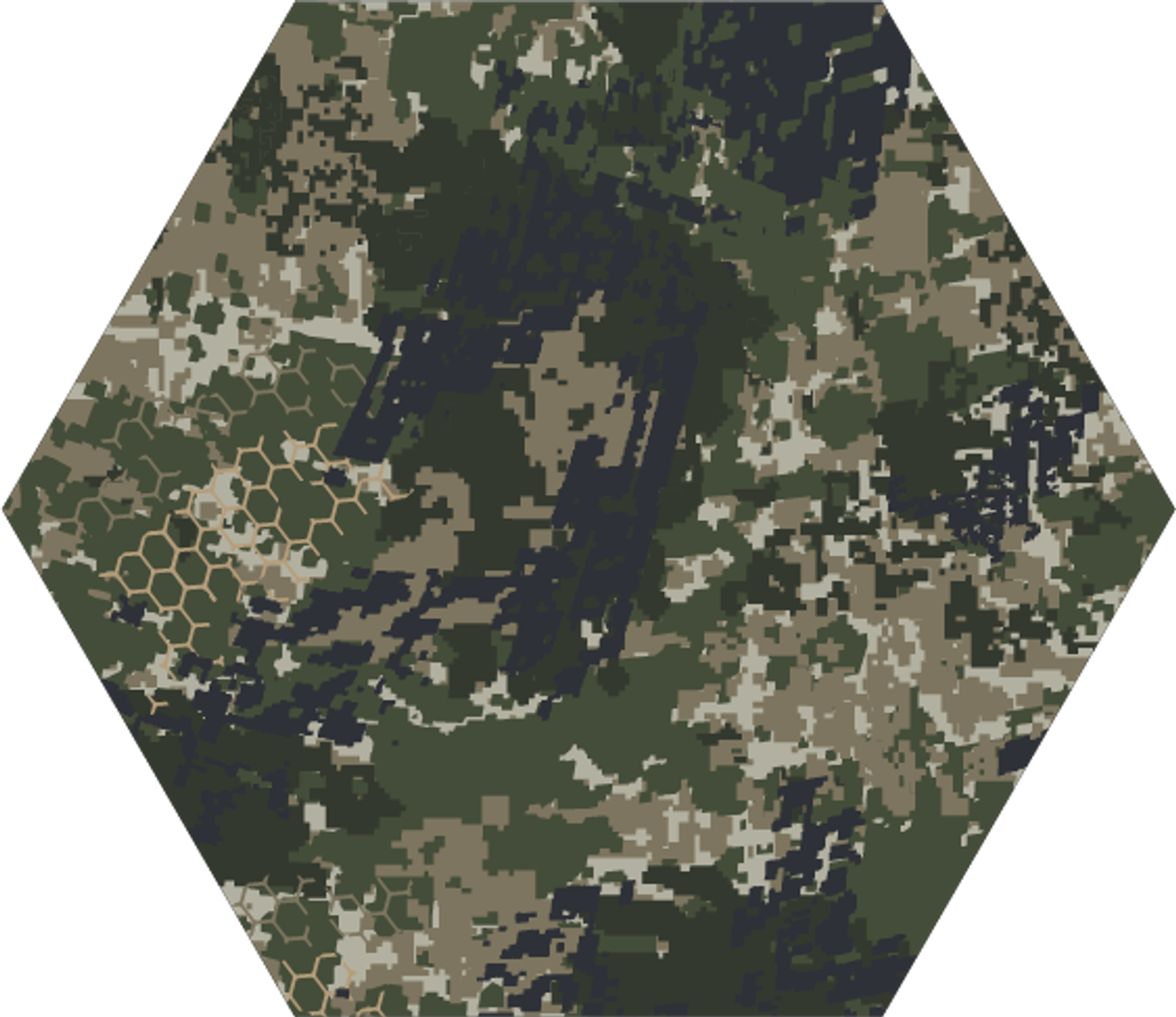
BlindTech Forest – for dense green forests
BlindTech Forest uses layers of green tones and contrasting digital elements to create effective camouflage in lush forest vegetation.
Best suited for: Dense green forests and mixed forests.
Recommended hunting: Forest hunting during the greener months of the year and in areas with dense vegetation.
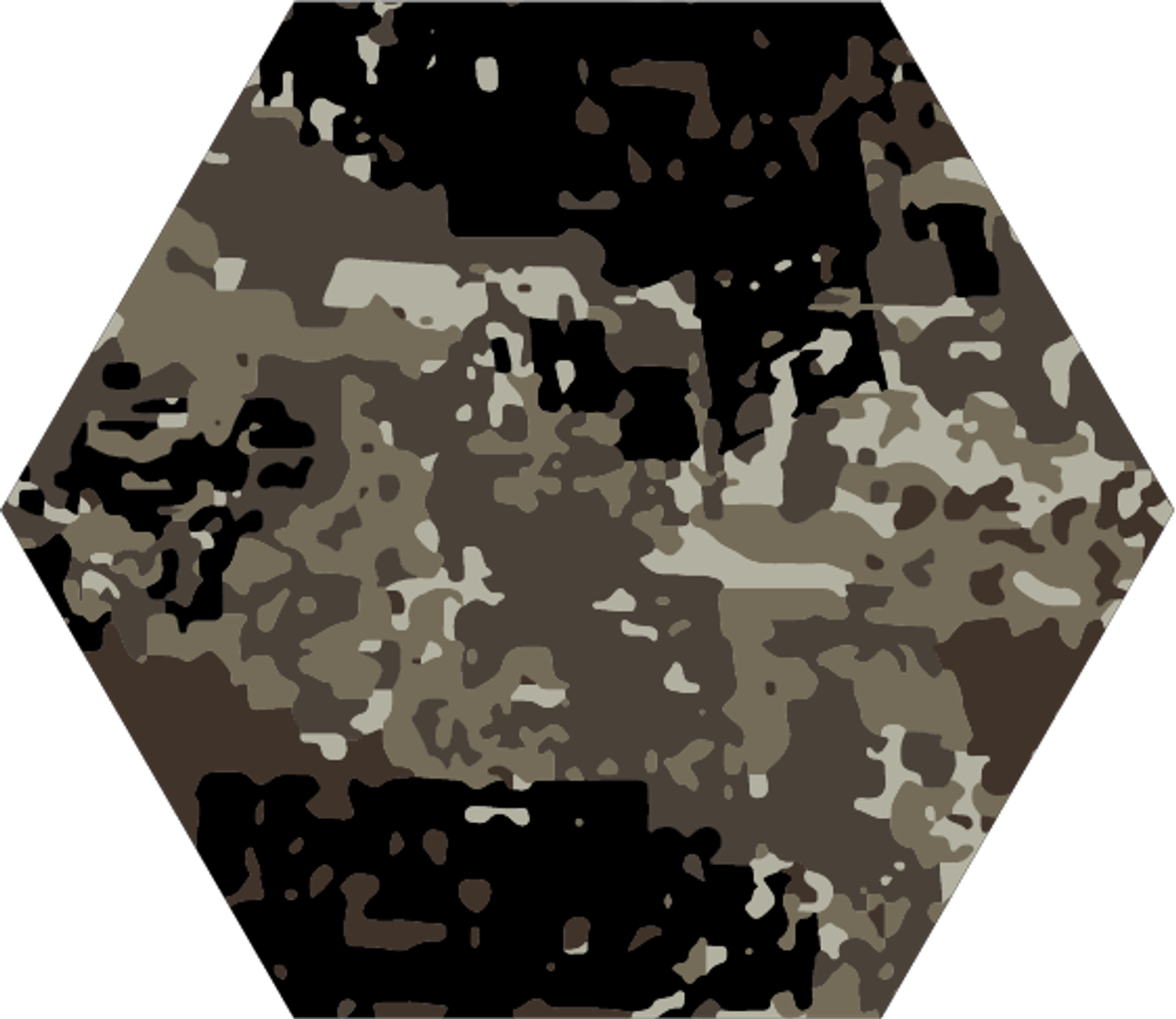
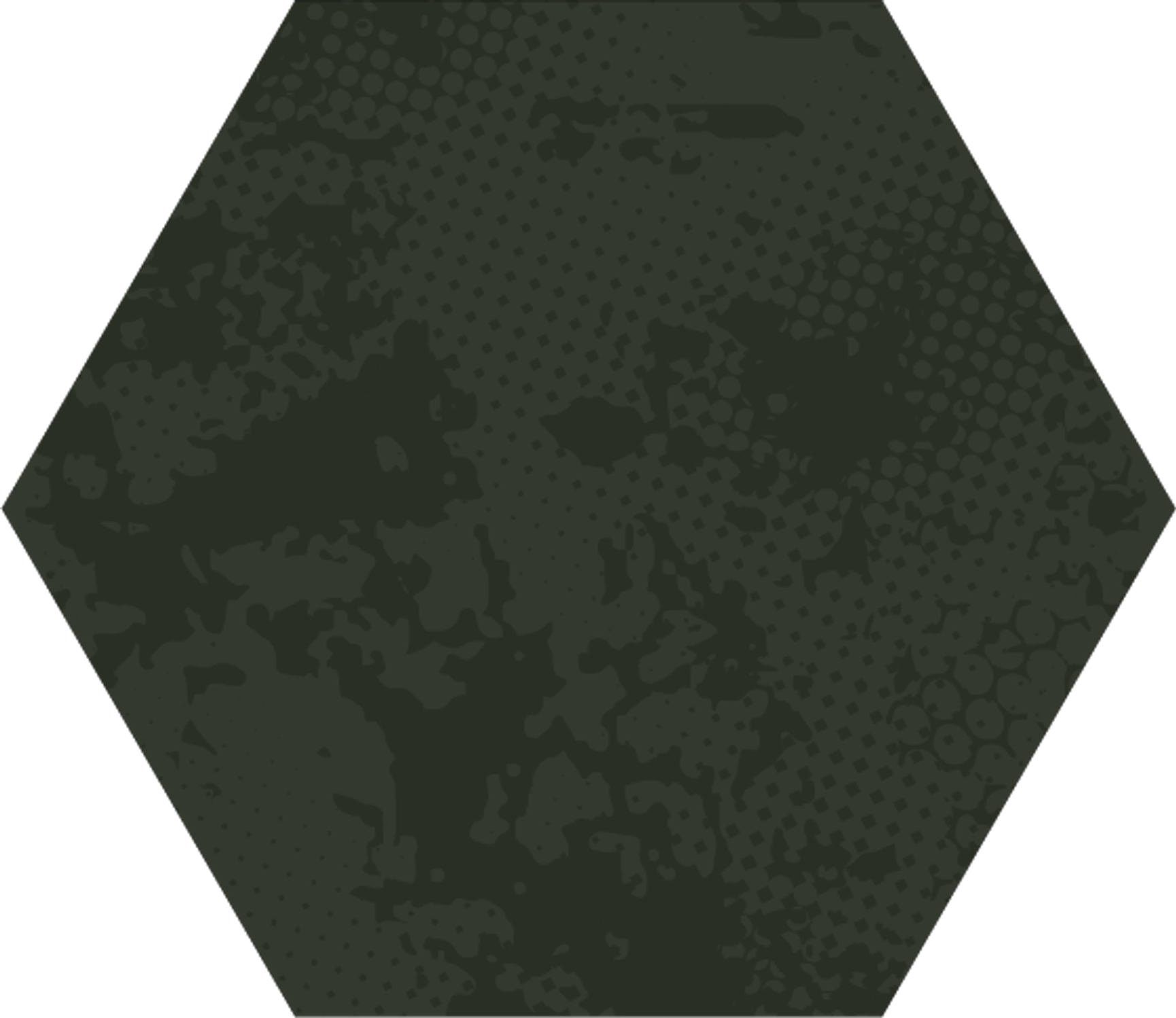
BlindTech Night Green Blur – for dark and shaded environments
Deep green tones are combined with a subtle, softer pattern that helps reduce the hunter’s outline in darker surroundings.
Best suited for: Dense forests, shaded woodland and environments with limited light.
Recommended hunting: Stand hunting and stalking in darker forest environments.
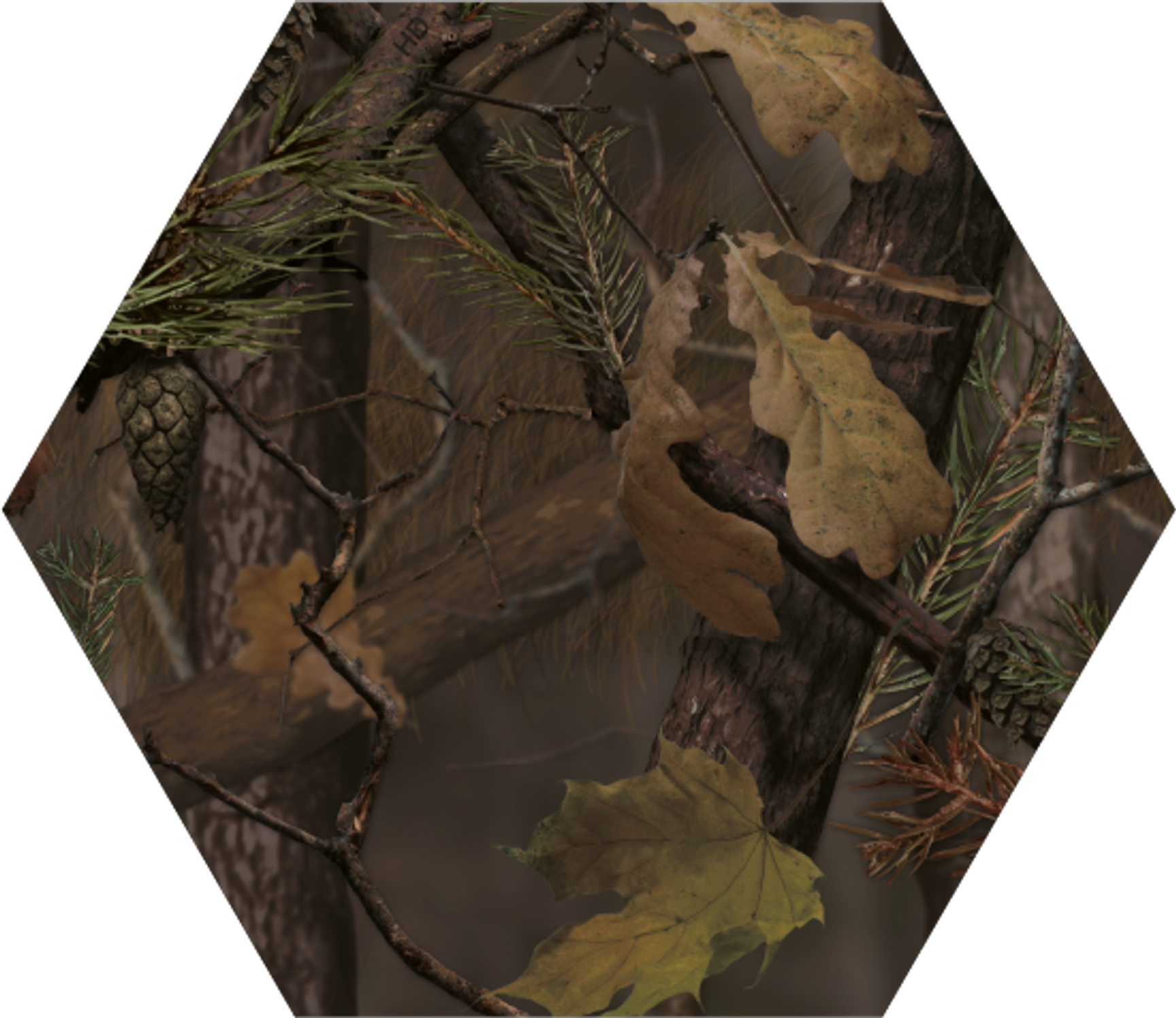
BlindMax HD – photorealistic camouflage for forest hunting
BlindMax HD uses photographic elements inspired by natural vegetation and the forest floor. The combination of colours and details is designed to help the hunter blend into varied forest environments.
Best suited for: Mixed forests with natural vegetation.
Recommended hunting: Stalking and stand hunting where realistic, natural-looking camouflage is a priority.
When do you need camouflage with high-visibility orange?
For certain types of hunting, your hunting clothing needs to help you blend into the surroundings while also keeping you clearly visible to other people.
Alaska 1795 offers several camouflage patterns that combine camouflage with high-visibility orange. They are particularly useful for hunts where several hunters are operating within the same area.
How does game perceive colours?
Different game species perceive colours in different ways. Deer species, for example, have different colour vision from humans and do not perceive red and orange in the same way we do. Camouflage is therefore not just about colour, but also about breaking up the hunter’s silhouette through patterns, contrasts and shapes.
This is one reason why orange can be combined with camouflage patterns: the colour increases visibility to other hunters, while the pattern helps break up the hunter’s outline.
Which orange camouflage pattern is right for your hunt?
The right pattern depends, among other things, on how much visibility you need and the type of forest environment you hunt in.
Safety Mix: Balanced camouflage + orange
Blaze Blur: High visibility is the priority
Blaze 3D: High visibility + photorealistic forest structure
Visibility requirements
Requirements for visibility and high-visibility colours may vary between countries and types of hunting. Always check the regulations that apply in the area where you hunt.
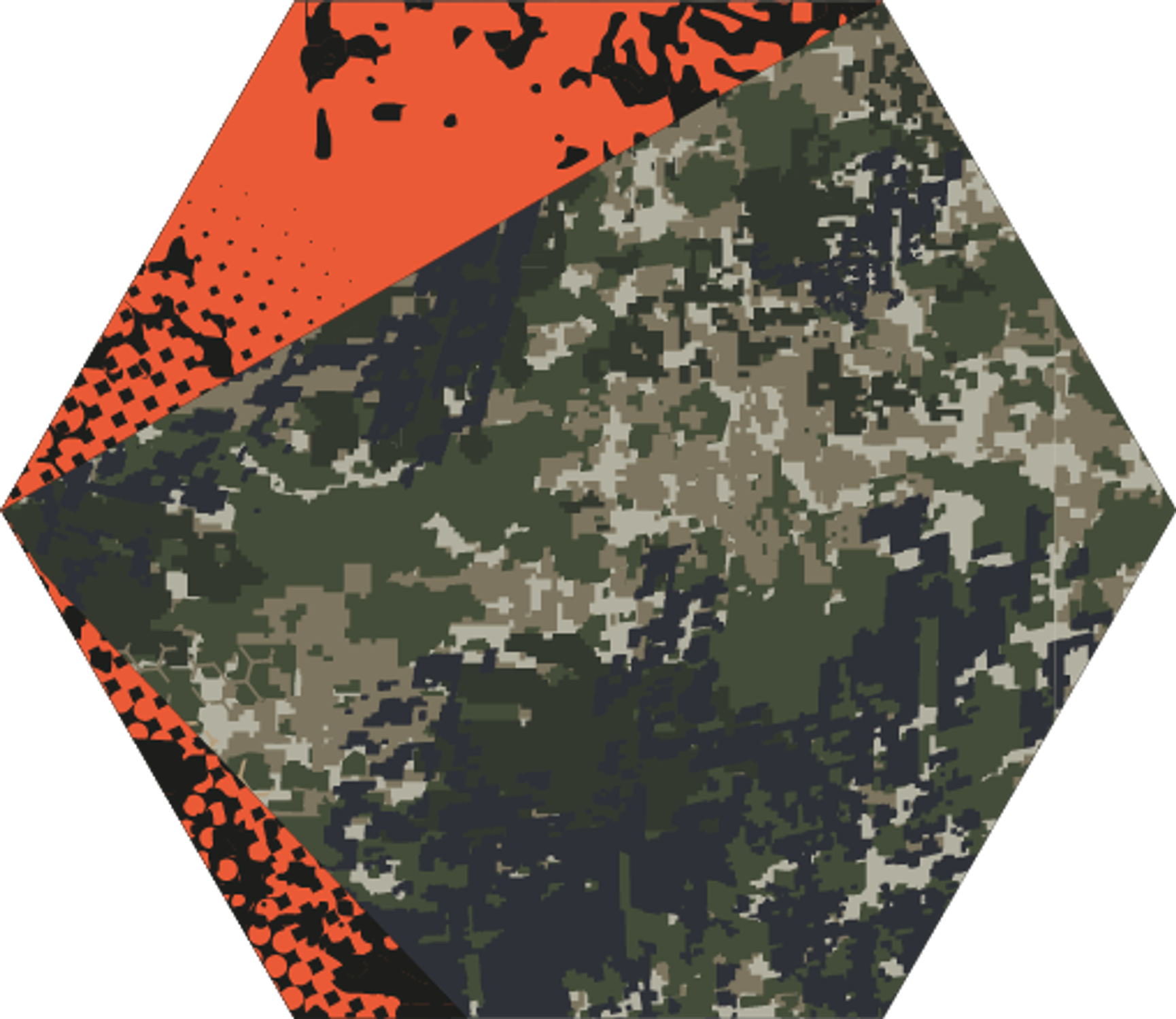
BlindTech Safety Mix – camouflage and visibility in one pattern
BlindTech Safety Mix combines green digital camouflage with strategically placed orange areas. This provides a balance between blending into the forest environment and increased visibility to other hunters.
Best suited for: Dense forests and mixed forests.
Recommended hunting: Active forest hunting where increased visibility to other hunters is important.
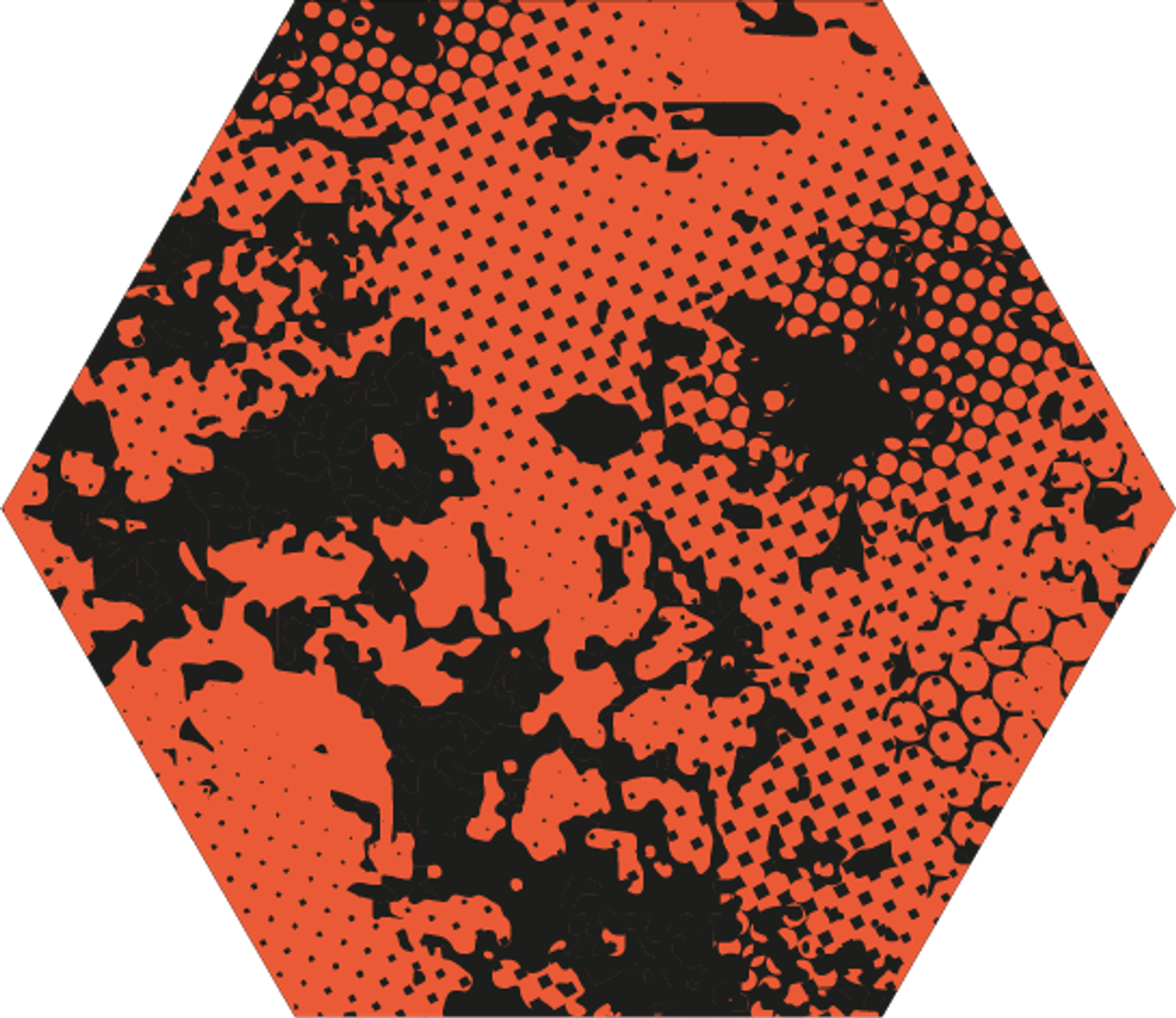
BlindTech Blaze Blur – when high visibility is the priority
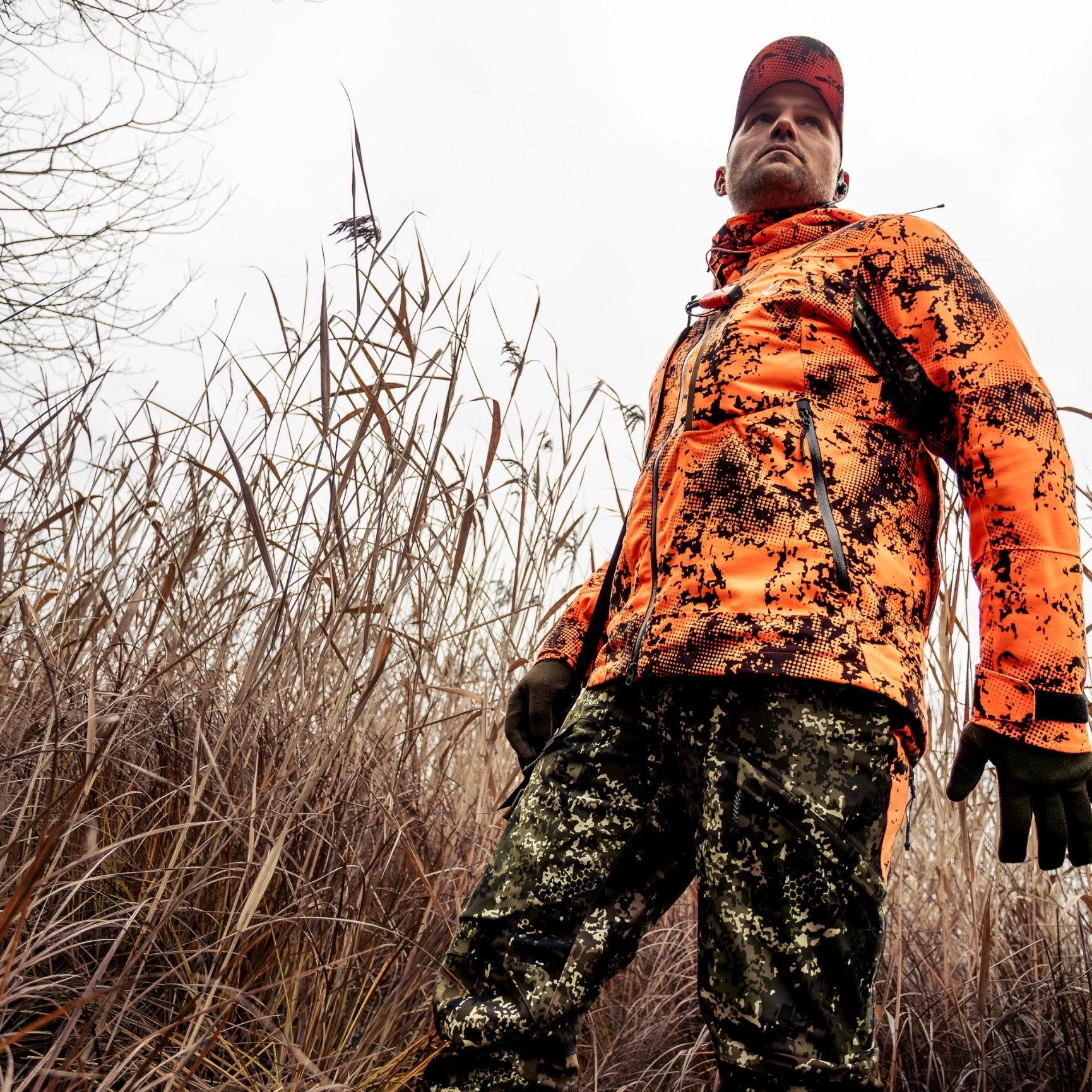
BlindTech Blaze Blur combines bright high-visibility orange with darker, softly blurred elements that help break up the outline of both the hunting clothing and the hunter.
Best suited for: Dense forests and terrain with limited visibility.
Recommended hunting: Driven hunts and group hunting where high visibility to other hunters is particularly important.
Blaze 3D – visibility meets realistic natural detail
Blaze 3D combines high-visibility orange with photorealistic branches and vegetation. The result brings together high visibility with visual elements inspired by the forest environment.
Best suited for: Woodland with branches and natural vegetation.
Recommended hunting: Forest hunting where increased visibility to other hunters is important.
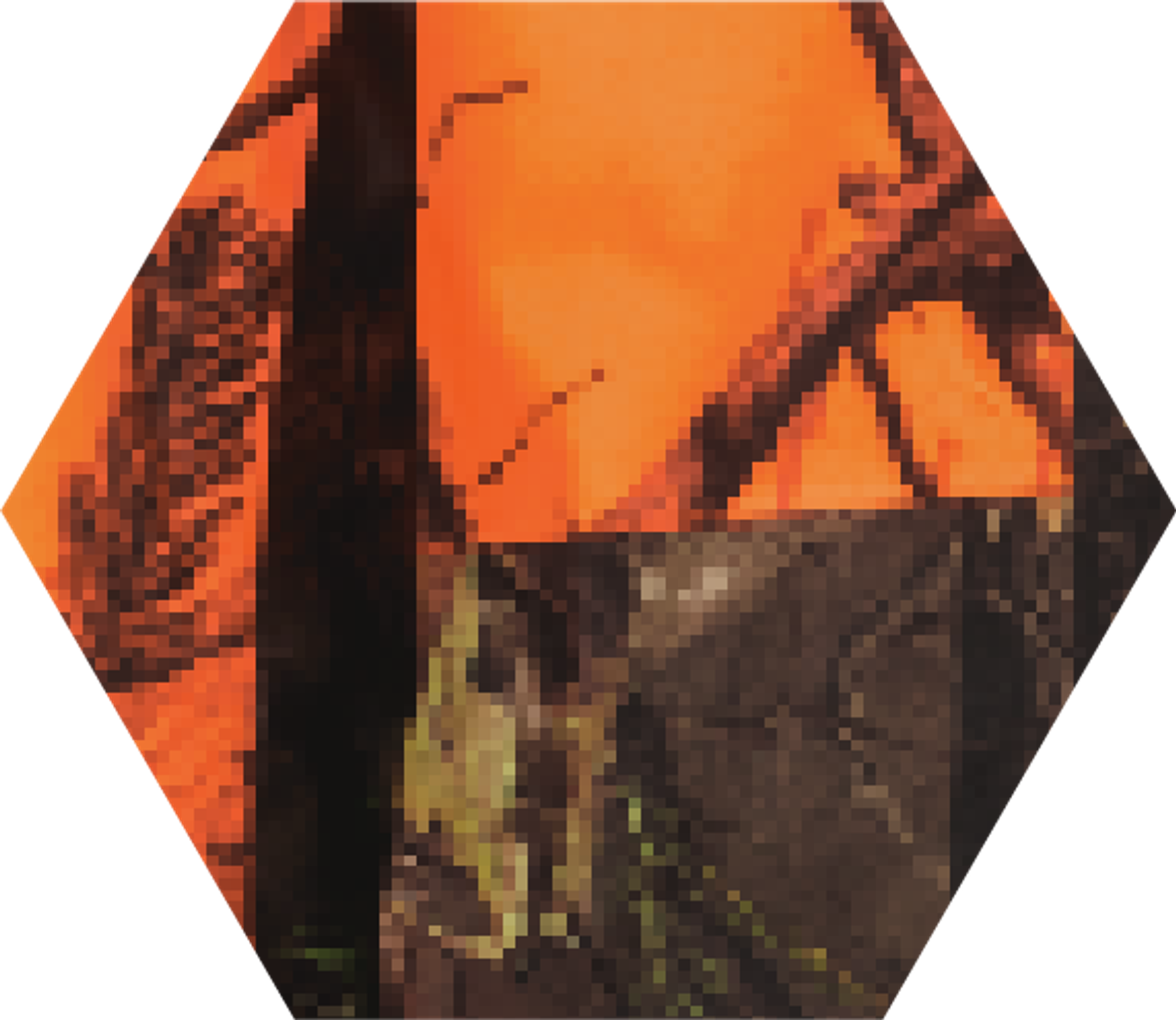
BlindTech Snow Blur – camouflage for winter hunting
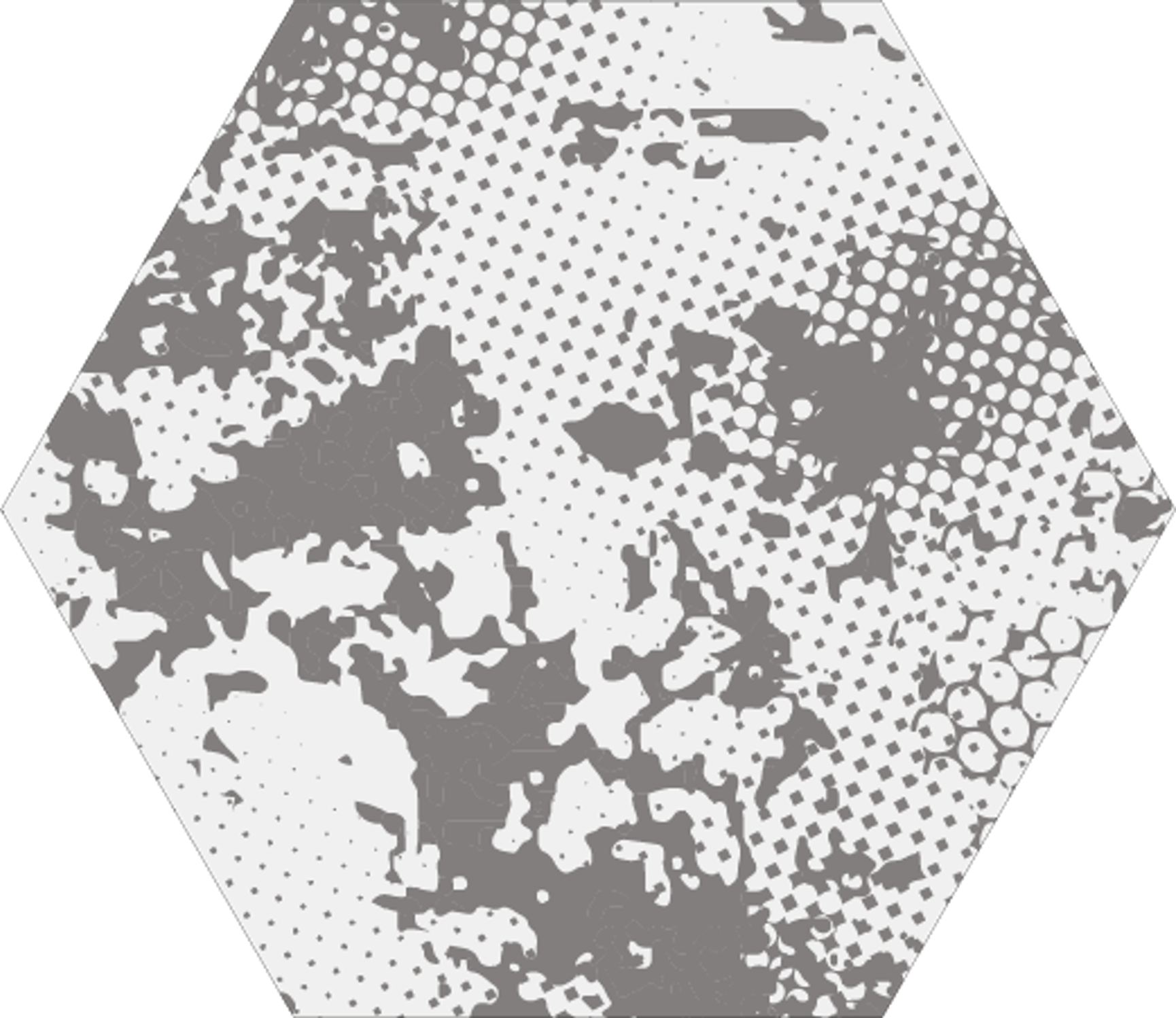
BlindTech Snow Blur uses layers of white and grey to mimic the shadows, textures and natural variations of a snow-covered landscape.
Best suited for: Snow-covered forests and open winter landscapes.
Recommended hunting: Various types of hunting in snow-covered terrain.
Is one camouflage pattern best for all types of hunting?
No. A pattern that works very well in dense green forest may not be the best choice in reed beds or when the landscape is covered in snow.
We therefore recommend considering these factors first:
- Terrain – dense forest, open ground, reed beds or snow.
- Season – the colour and density of vegetation change throughout the year.
- Type of hunting – active stalking and stationary stand hunting have different requirements.
- Need for visibility – for certain types of hunting, being visible to other hunters is particularly important.
If you take part in several types of hunting, different camouflage patterns can therefore serve different purposes in your hunting wardrobe.
How do I choose between camouflage and solid-colour hunting clothing?
Camouflage is particularly useful when you want to make your silhouette less noticeable against the surrounding environment. For other types of hunting, solid-colour hunting clothing in shades such as green or brown can be an equally natural choice.
The choice is therefore not simply about which pattern is “best”, but about where you hunt, how you hunt and what you need from your hunting clothing.
Find the right Alaska 1795 camouflage for your hunt
From green forests and reed beds to driven hunts and snow-covered winter landscapes, Alaska 1795 camouflage patterns are designed for different environments and types of hunting.
Explore Alaska 1795 camouflage hunting clothing and find the pattern that suits your type of hunting, terrain and season.
Camouflage Patterns for Hunting Clothing